2015-09-29

Lead-free Radiation Shielding Advantages

Lead has been considered to be the good ability in radiation shielding for decades. It’s cheap, easy to process, and provides very effective shielding. Yet growing health, safety and environmental concerns over the mining, processing, handling and disposal of lead have brought about an increasingly stringent regulatory environment regarding the sale and use of lead products.
There are three factors which determine the amount of radiation received from a source: time of exposure; distance from source; and shielding. Based upon the application, the optimized shielding by designing the material density and wall thickness has been found. Utilizing a composite of tungsten powder in a polymeric matrix, lead free radiation shielding materials provide device manufacturers and material processors with a completely lead-free, injection-moldable thermoplastic solution to overcome all regulatory concerns and satisfy radiation shielding needs.

Lead-free radiation shielding advantages of high density, small capacity, good machinability, environment friendly, etc. have led tungsten material more and more popular with the public.
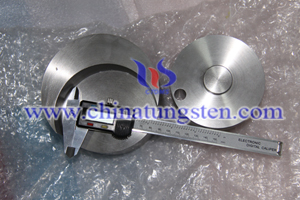
 Iridium 192 tungsten radiation shielding

Tungsten Polymer Sheet Applications

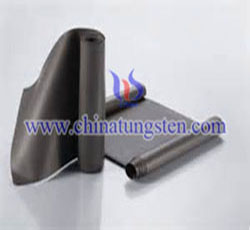
Tungsten polymer sheet applications are mainly for radiation protection as its high density but easily to be cut into different shape needed, which have been proven to be safe and have no effect on the human body. Tungsten polymer is a high-polymer material that possesses the properties of both plastic and rubber, so it is easily to be cut or holed with household scissors and formed into shapes with various curved surfaces.

Other radiation shielding products have been made mainly from sheets of metal such as lead, it also has ability of radiation protection, however, as it is lower density, making the shielding much heavier and very hard to handle, and there have been concerns about their effects on the human body. In contrast, tungsten polymer sheet comprised of soft thermoplastic lassoers integrated with an inorganic substance is mainly used for radiation protection applications. Tungsten polymer sheet applications are mainly as follows:

Radiation shielding and radiation-protective equipment;
X-ray inspection device for industrial and medical use;
Gamma-ray shielding material and substitute for lead fiber mat in nuclear reactor piping systems.


For more details, you could visit tungsten polymer sheet. 

Tungsten Polymer Green Materials for Radiation Shielding

2015-08-31

Tungsten Polymer Shielding Properties

Tungsten polymer shielding is made of tungsten powder and polymer, tungsten polymer enjoys many excellent properties or special characteristics such as high density (≥11.34 g/cm3), perfect radiation shielding performance, good flexibility, excellent workability and perfect environmental suitability.
The main properties are as follows:
1.Provides approx. 75% attenuation as compared to solid lead
2.Attenuation of 175% compared to a high density lead blanket
3.Priced competitively to lead for many applications
4.Available as a blanket, ribbon wrap or molded shapes; flexible or rigid
5.Cut materials to fit without needing to seal edges - no residue
6.Included fasteners, grommets, locking devices, etc.
7.Improved fit-up --- molded applications typically will yield much higher reduction factors - less weight with same impact
8.Tested to 550°F/288°C

Any more details could found in tungsten polymer shielding. 


Tungsten Polymer Shielding Applications

Tungsten polymer shielding applications are so many and could work as lead alternatives as its high density and excellent radiation absorption.

Typical shielding densities approaching twice that of high density lead blankets with similar thickness. The new shielding material, which is tungsten polymer, with highly flexible and can be molded/formed into any shape. Tungsten polymer is a composition of various resins and tungsten powder which are mixed together through special metallurgical technology. The resins may include ABS (acryloynitrile butadiene styrene), PP (polypropylene), PBT (polybutylene terephthalate), PA (polyamide), PU (polyurethane), TPE (thermoplastic elastomer), etc. This material often is considered as lead alternatives.

The main of Tungsten polymer shielding applications:
Maximized the shielding impact, particularly in tight spaces
Offering ease of installing and securing
Integral securing straps included
Greatly increased shielding effectiveness by custom profiling the shield relative to the "hot spot" or radiation source

Any more details could found in tungsten polymer shielding. 


Tungsten Radiation Shielding Machining

High-density tungsten radiation shielding is extremely strong and durable (typical hardness ranges from 24-32 RC), so it has a good machinability. Tungsten has low-thermal expansion rate and resistance to breakage and chipping allow you to achieve very close tolerances and hold fine finishes.

There are some main machining processes for tungsten radiation shielding:
Turning: Positive rake tooling is suggested. Seco triangle inserts TPG432 or TPG431 grade 883.
Drilling: Carbide tooling is suggested. Increased clearance angles and automatic feeds are often used to avoid binding and seizing. Carbide drills will give a better tool life.
Milling: Premium uncoated end mills with a regular spiral such as SGS. Insert cutters; use square multi-edge or single edge cutters, such as KC730. Also can use positive rake octagon cutters, such as Seco grade 883.
Cutting: When sawing, use a bi-metal blade; blade pitch should be relative to the thickness of the material. Material can also be cut using high-speed abrasive cutoff wheels.
Threading: when it needs to be assembled, thread is required. Carbide tool is suggested.

Any more details could found in tungsten radiation shielding. 


Tungsten is Good Choice for Radiation Shielding

Unlike lead, tungsten material could reduce the size and volume to have the same radiation absorption as lead.
As we know, tungsten is widely used for radioactive source containers, gamma radiography, shields and source holders for oil-well, logging, and industrial instrumentation, because of its high density, much denser then better radiation absorption. Therefore, tungsten is also popular for medical radiation shielding such as used in cancer therapy, as well as syringe protection for radioactive injections, etc.
When you need to direct a specific amount of radiation to a targeted area, tungsten provides the control you need even under extreme, high-heat conditions.

Any more details could found in tungsten radiation shielding. 


2015-07-31

Tungsten Medical Shielding Application

Tungsten medical shielding application is using as collimator for its high density.
It is the most effective material for shielding and has good machinable, so it is widely usedfor radiation protection in medical areas.
Compared to lead, tungsten is much more environmentally friendly and higher density with smaller capacity of the same weight. It usually used to absorb X-ray and gamma ray by making into the collimator, which is a device that filters a stream of rays so that only those traveling parallel to a specified direction are allowed through. According to the use of lenses, it is not yet possible to focus radiation with such short wavelengths into an image as is routine with electromagnetic radiation at optical or near optical wavelengths. In this way, tungsten medical shielding works as collimator is useful in absorbing neutron, X-ray and gamma-ray.

If you need more information about tungsten medical shielding, you could visit http://www.tungsten-alloy.com/medical-applications-of-tungsten-alloy.html.