显示标签为“radiation protection”的博文。显示所有博文

2015-10-30

Why Tungsten is Good Choice for Radiation Protection

Tungsten material could reduce the size and volume to have a better radiation absorption environment, which is much superior to lead, because of its high density rage from 17.0g/cm3 to 18.5g/cm3, then much denser. When you need to direct a specific amount of radiation to a targeted area, tungsten provides a control you need even under extreme, high-heat conditions.


Therefore, tungsten is popular for radioactive source containers, gamma radiography, source holders for oil-well logging and industrial instrumentation; also used widely for medical radiation protection such as in cancer therapy, syringe injections radioactive protection, X-ray examination, gamma knife operation, etc.


2015-09-29

Tungsten Alloy for Efficient Radiation Protection

Lead is a toxic material that is harmful to the environment and humans. The onerous recycling process makes lead expensive despite the low initial procurement costs. Many enterprises are therefore looking for a suitable alternative for providing efficient radiation protection.

Whether in the world of medical or industrial X-ray technology, radiotherapy or nuclear power stations: Wherever high-energy radiation is used, it is vital to protect people against it. The denser the material, the better radiation absorption will be. That is why tungsten alloy absorbs X-rays and gamma radiation particularly well. Lead is still the most frequently used shielding material as it is very soft material, and mostly used only in combination with support structures made of steel.

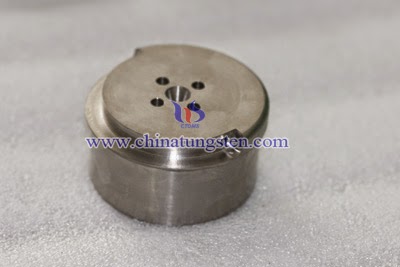
Cesium 137 tungsten radiation shielding

2014-10-31

The Energy of X-ray

All radiant energy, including X-ray, has its origin in a disturbance of electrical charge. Consider a point charge — an electron — surrounded by a symmetrical electromagnetic field and moving through space at constant velocity. What happens to the motion of the field if the central charge is speeded up or slowed down? Experiments indicate that the field reacts much like a mass of jelly. When the central charge is accelerated, the disturbance is communicated radially through the field as a wave motion — the outside parts of the field requiring an appreciable time interval to catch up with the center. Work expended in accelerating the central charge is carried away by the wave as radiant energy, at a velocity which depends on the nature of the “jelly.”

Tungsten alloy is a suitable material for radiation protection, for more details, you could visit: http://www.tungsten-alloy.com/en/alloy07.htm.


2014-06-30

Two Types of Radiation Exposure


There is a concern for two types of exposure: acute and chronic.
An acute exposure is a single accidental exposure to a high dose of radiation during a short period of time. An acute exposure has the potential for producing both nonstochastic and stochastic effects. Chronic exposure, which is also sometimes called "continuous exposure," is long-term, low level overexposure. Chronic exposure may result in stochastic health effects and is likely to be the result of improper or inadequate protective measures.
Tungsten alloy material is usually used for radiation protection, if you need more information, you could visit: http://www.tungsten-alloy.com/tungsten-alloy-radiation-shielding.html

2014-05-30

How Radiation to be Measured?

Radiation is measured in two units - rads and rems. A rad stands for "radiation absorbed dose" and measures the amount of energy that is actually absorbed per unit mass. A rem stands for "roentgen equivalent man" and is a unit that measures the absorbed dose in human tissue and relates it to the effective damage done to your tissue. It is significant because not all radiation has the same biological effect. The radioactivity of a source is usually measured in how many rads or rems you would receive per hour; a geiger counter normally measures radiation in millirems per hour (mr/hr).

For more details, you could visit radiation protection.

Different Radiations

Here are many different radiations in our life:

An alpha particle (a) consists of two protons and two neutrons (a helium nucleus). It has a relatively large mass and a positive charge. Alpha particles are easily shielded by a piece of paper or human skin. Therefore, health effects of alpha exposure occur only when the particles are inhaled, ingested, or enter the body through a cut in the skin. More serious would be a material that is radioactive (a emitter) that is ingested into the body. The a particles emitted inside the body, for example in bone marrow, can be exceedingly dangerous.

Beta particles (b) are fast electrons produced following nuclear decay of certain radioactive materials. The amount of energy (speed) that a beta particle contains determines its penetrating capacity. Six millimeters of aluminum are needed to stop most b particles.

Gamma rays (g), an electromagnetic wave, are similar in form to visible light and radio waves. However, gamma waves are very energetic and have a far shorter wavelength. Gamma rays are produced from radioactive decay, in nuclear reactions, and in fission. Gamma rays are dangerous because they have great penetrating ability. Several millimeters of lead are needed to stop gamma rays.

Therefore, radiation protection is more and more important, for more details, you should visit radiation protection.

2014-03-03

Tungsten Alloy X-Ray Tube

Tungsten alloy X-ray tubes used for diagnostic imaging typically consist of four main components: the anode, the cathode, the frame structure and the housing. The main function of the anode is to provide a track material for the electron beam, which is generally a tungsten-rhenium alloy. In general, the process of X-radiation production is only 1 % efficient at generating characteristic X-ray radiation, the rest is converted to heat. Heat management is paramount; particularly since higher power levels are desired due to the increase in X-ray efficiency with power, and faster imaging. Due to the large energy adsorption, it is necessary to rotate the anode to constantly bring cooler material under the electron beam.

Several different materials have been described as being useful as tungsten alloy x-ray tube anodes to give radiation protection.


2013-10-30

Tungsten Radiation Protection on the Way to Mars

A study published in the journal Science in May 2013 calculates 662 +/ 108 millisieverts (mSv) of radiation exposure for a 360 day return trip, as measured by the Radiation Assessment Detector (RAD). The study shows that ninety five percent of the radiation received by the RAD instrument came from Galactic Cosmic Rays or GCRs, which are hard to shield against without use of prohibitive shielding mass (1).

The 210-day journey Mars One settlers will take, amounts to radiation exposure of 386 +/- 63 mSv, considering these recent measurements as standard. This exposure is below the upper limits of accepted standards for an astronaut career: European Space Agency, Russian Space Agency and Canadian Space Agency limit is 1000 mSv; NASA limits are between 600-1200mSv, depending on sex and age .

That is very terrible, how to have a radiation protection from that? For more details, please visit: Tungsten Alloy Radiation Shielding.


High Density Make Tungsten Alloy as Radiation Shielding

Tungsten material is a refractory metal with a high melting point and a very high density. It can be used in a pure form but it becomes more useful as an engineering material when alloyed with small quantities of other elements to form a group of products sometimes referred to as Tungsten Heavy Metal Alloys (WHAs). 

These alloys usually contain 90-97% tungsten and initial forming requires a process of pressing and sintering. Different shapes can then be produced however near-final-shape sintering is more common. Tungsten alloys are based on its very high density where it is used to control or distribute weight in some way, however, they could also be used in radiation protection. 

As we know, tungsten is up to 65% denser than lead and 130% denser than steel., tungsten alloy radiation shielding is a second common application area. Besides, tungsten alloys generally have high strength and good creep resistance.

For more details, you could visit tungsten alloy radiation shielding.


2013-06-30

Radiation Protection

Although radiation is naturally present in our environment, it can have either beneficial or harmful effects, depending on its use and control. For that reason, Chinatungsten could offer tungsten radiation shielding for protecting people and the environment from unnecessary exposure to radiation as a result of civilian uses of nuclear materials. Toward that end, Chinatungsten requires nuclear power plants; research reactors; and other medical, industrial, and academic licensees to use and store radioactive materials in a way that eliminates unnecessary exposure and protects radiation workers and the public.